A departure, not (necessarily) a verdict
Peter Lee’s exit from Microsoft generated outsized attention partly because of who he is. As President of Microsoft Science and formerly the head of Microsoft Research — one of the most recognized corporate research labs in the industry — Lee spent more than two decades shaping how Microsoft thinks about AI and scientific discovery, after earlier stints at Carnegie Mellon and DARPA. His departure, alongside that of longtime LinkedIn and Office executive Ryan Roslansky, landed on GeekWire’s most-read list for the week of Sept. 27.
It’s tempting to read two senior exits in one week as a sign that something is cracking inside Microsoft’s AI strategy. The sources don’t support that leap. Lee himself described the move in personal terms, telling colleagues on LinkedIn that he was taking a "once-in-a-lifetime opportunity" after asking himself whether he’d regret passing it up — the kind of late-career calculation plenty of long-tenured executives eventually make, regardless of how their employer is performing. He’s also staying connected to healthcare institutions like Mayo Clinic and Seattle Children’s, suggesting this is a pivot rather than a retreat. Executive churn at large tech companies is common, and it often says more about internal reshuffling and individual timing than about a company’s underlying direction — a single week of departures isn’t proof of a strategic reset, even if it invites speculation.
A startup turning autonomy into a factory
If Microsoft’s news was about a person stepping back, Shield AI’s was about a company stepping forward — into steel, concrete, and payroll. The San Diego-based defense-tech firm, now valued at $12.7 billion, announced it is building its X-BAT autonomous fighter jet in Des Moines, Washington, just south of Seattle. The X-BAT is a striking piece of hardware: a 26-foot aircraft that launches and lands vertically from highways, ships, or remote sites, skipping runways entirely, with a projected 1,000-nautical-mile combat radius — well beyond the roughly 590 nautical miles cited for the F-35A.
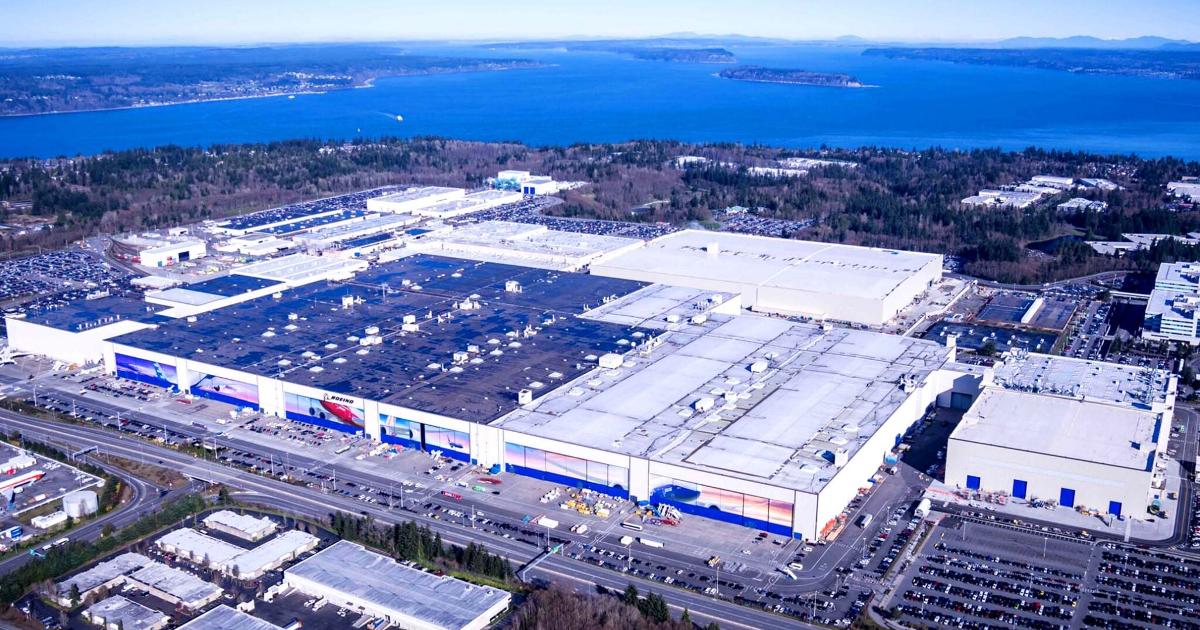
What makes this more than a product announcement is the reasoning behind the location. Shield AI says it evaluated more than a dozen sites before choosing the Seattle area specifically for its workforce: King County alone counts more than 45,000 aerospace workers across 400-plus companies, a legacy built over a century of Boeing-era manufacturing. Rather than separate its engineers from the factory floor — a common defense-industry cost-saving move — the company is deliberately colocating design and production, arguing that building a "software-defined aircraft" requires the two to sit side by side. The company expects the first aircraft to roll off the Des Moines line in 2028, with production ramping toward roughly 150 aircraft a year by the early 2030s.
The jobs and dollar figures attached to this are large: Shield AI cites an economic analysis projecting roughly 27,000 direct and indirect jobs and $73 billion added to the Seattle-area economy by 2046, with an initial 4,000 workers expected by the early 2030s. It’s worth being precise about what those numbers are: company-commissioned projections that assume the program reaches full production and sustained demand, not independent guarantees. They’re a reasonable scenario, not a locked-in outcome.
Comparing the two signals
| Microsoft leadership exit | Shield AI Washington expansion | |
|---|---|---|
| Company stage | Mature, decades-old incumbent | Venture-backed startup scaling production |
| What moved | One senior executive’s personal decision | A manufacturing facility and hiring plan |
| Business model | Enterprise software and cloud | AI autonomy software plus physical aircraft |
| Regional effect | Mostly symbolic/leadership signal | Concrete site, jobs, and supplier activity |
| Certainty level | Framed as individual career move | Projection dependent on full-rate production |
Why Washington keeps pulling this kind of bet
None of this means Washington’s tech climate is universally attractive. At the same Seattle event where Shield AI’s plans drew applause, Stoke Space CEO Andy Lapsa — whose company builds reusable rockets — told the audience he wasn’t sure he’d start his company in the state today, a reminder that cost and policy concerns are real even as investment arrives. Downtown Seattle has also lost jobs even as Bellevue’s tech corridor grows, a sign that gains aren’t evenly distributed geographically, let alone across industries.
The bigger shift
Put side by side, these stories aren’t contradictory so much as complementary. One is a reminder that even well-established research institutions see leadership turn over for ordinary, human reasons. The other shows a newer kind of company treating the region less as a software hub and more as an aerospace and manufacturing base — hiring composite technicians and avionics engineers alongside autonomy developers. Neither proves the region is simply booming or fading. Together, they suggest the Pacific Northwest’s tech identity is spreading across more categories at once: cloud software, AI research, defense hardware, and industrial supply chains, each carrying its own pace of growth and its own open questions about whether today’s announcements become tomorrow’s paychecks.