That gap — between the fluent voice and the plumbing behind it — is worth understanding now, because AI phone agents are quietly moving from novelty demos into everyday business workflows: booking consultations, rescheduling appointments, qualifying sales calls, routing support requests. The question worth asking isn’t "does the AI sound convincing?" It’s "what has to go right, structurally, before that AI can be trusted to touch a real calendar or a real customer record?"
The voice is a thin layer over a supply chain
It helps to stop thinking of an AI receptionist as one clever chatbot wearing a phone headset. It’s closer to a small assembly line: telephony infrastructure, speech recognition, a language model, application code, business databases, and a set of rules about when to bring in a human. Each stage does one job and hands a cleaned-up version of the problem to the next stage.
That layering is the actual story. The language model is the part that reasons in natural language, but it is deliberately kept away from directly touching anything that matters — calendars, payment systems, customer records. Everything it "decides" has to pass through application code that checks, executes, and confirms before the caller ever hears "you’re all set."
Getting the call to somewhere that can think
Before any AI is involved, the call has to physically arrive. A customer dials a business number, and a telecom provider has to route that audio somewhere useful. In production systems this typically runs over SIP trunking, the technology that connects a phone system to the public telephone network over the internet, using providers such as Twilio, Bandwidth, or Nextiva.
When the call comes in, the provider notifies an application through a webhook — an HTTP callback that lets one system tell another "something just happened." The application answers with instructions for handling the call. At this stage there’s often no AI at all; it’s just a program deciding what happens next. That’s the first architectural boundary worth noticing: the phone network’s job ends at "a call arrived," and everything about interpreting that call belongs to the software layer above it.
From sound waves to something software can read
People talk in audio; software mostly works with text and structured data. That gap is closed by ASR — Automatic Speech Recognition — which converts the caller’s spoken words into a text transcript the rest of the system can process. A caller saying "I need to move my appointment from Friday to Monday afternoon" becomes, functionally, a line of text with maybe a confidence score attached.
This separation matters more than it looks. Because the reasoning layer never touches raw audio, it doesn’t need to understand telephone noise, accents-as-signal-quality, or overlapping speech — it just receives clean text. But it also means the system now depends on transcription accuracy: if the ASR mishears "Monday" as "Sunday," everything downstream inherits that mistake with total confidence. There’s a real, practical tension here between recognizing speech fast enough to keep a conversation from feeling stilted and waiting long enough to be reasonably sure of what was actually said.
A conversation is a loop, not one answer
An AI phone agent doesn’t process an entire call in a single pass. It runs as a loop: the caller speaks, speech becomes text, the application sends that text plus the running context to the model, the model decides what to say or do, and the reply is converted back to audio. Then the caller speaks again, and the loop repeats.
The "context" part is what makes this feel like a conversation instead of a series of disconnected questions. If a caller says "I want to book an appointment," gets asked what type, and answers "an initial consultation," that second sentence only makes sense because the system remembered the first one. In practice this is stored as a small structured object — intent, appointment type, customer name, preferred date — that fills in as the call progresses.
Where the model proposes and the software decides
This is the part that separates a phone chatbot from something a business can actually rely on: function calling, sometimes called tool calling. The application exposes a limited menu of actions the model is allowed to request — checking calendar availability, booking a slot, creating a CRM lead — and the model’s job is only to decide which action fits, using structured outputs so its request arrives as clean, parseable data rather than a paragraph the application has to interpret.
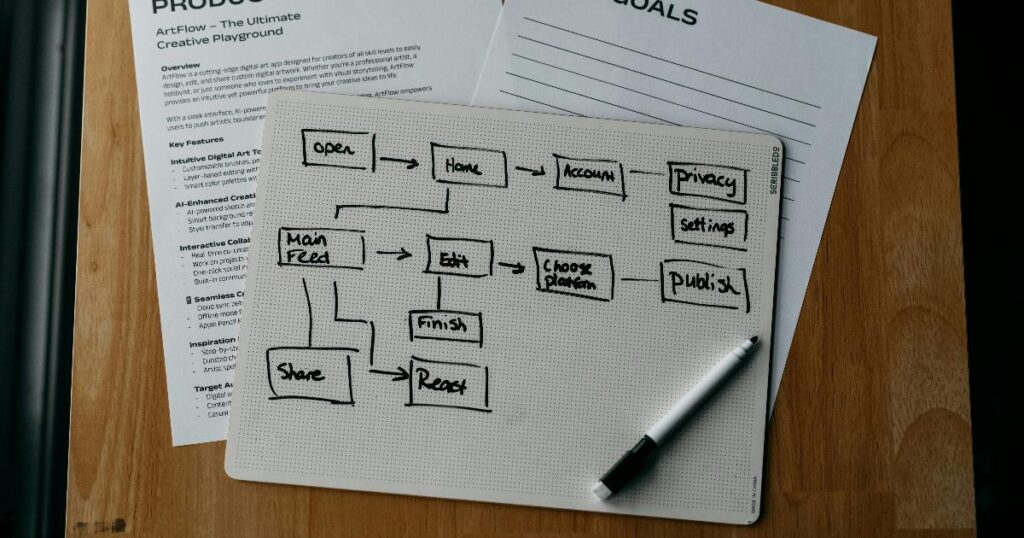
flowchart LR
A[Caller speaks] --> B[Telephony connects the call]
B --> C[Speech-to-text]
C --> D[Model interprets intent]
D --> E[Model requests a tool call]
E --> F[App validates and executes]
F --> G[Confirmation or human handoff]
Notice what the model is not doing at step E: it isn’t checking the calendar itself, and it isn’t writing to it. It’s asking. The application at step F is where permissions, validation, and error handling actually live — the place a developer can say "no, that slot is already taken" regardless of how confidently the model believed otherwise.
Who does what, and where the guardrails have to sit
Laid out side by side, the division of labor looks less like "an AI" and more like a chain of specialists, each with a boundary they shouldn’t cross alone:
| Layer | What it does | What it must not decide alone |
|---|---|---|
| Telephony / SIP trunking | Connects the call, notifies the application, later reports call status | Whether the caller’s actual request succeeded |
| Speech recognition (ASR) | Converts audio into text, sometimes with confidence scores | Whether that text correctly captures intent |
| Language model | Interprets intent, holds conversational context, requests actions | Whether an action is actually permitted or safe to execute |
| Tool-calling layer / application code | Validates inputs, checks permissions, executes the real function | Whether it needs to double-check the model’s judgment first |
| Business systems (calendar, CRM) | Confirms or rejects the actual booking or record update | Nothing — this is the source of truth |
| Escalation / human handoff | Receives context, transcript, and summary when a human is needed | Whether to accept a handoff with no context at all |
Saying "booked" only after it’s actually booked
The clearest illustration of the whole philosophy is appointment booking. When a caller picks an available slot, the model can request a book_appointment action — but that request is not the same thing as a booking. The application still has to check that the slot is still open, then call the calendar system, and only report success back to the model once the calendar confirms the event was actually created. Google’s own Calendar API, for instance, requires an explicit event-creation call with a defined start and end time before anything is considered scheduled — there’s no ambiguity in that layer about whether something happened.
That ordering is not a technicality. If the conversational layer told the caller "you’re booked" the moment the model chose that action, a failed or double-booked slot would produce a caller who believes they have an appointment that doesn’t exist. The rule that matters here is simple: the model suggests, the calendar confirms, and only the confirmed result gets spoken back.
When the call needs a human, and what "handoff" should mean
Not every call belongs with an AI. A production system has explicit rules for escalation — a caller asking for a person, a request outside supported workflows, or categories a business has decided always need a human. What separates a good handoff from a frustrating one isn’t that the transfer happens; it’s what travels with it. A useful handoff carries the caller’s summary, reason for escalation, and anything already accomplished — like verified identity — so the employee doesn’t force the customer to repeat themselves. A transfer that drops the caller into a queue with no transcript and no summary isn’t really a handoff, even if the call technically connected.
That distinction also applies to how "success" gets measured after the call ends. Telephony systems report call status — initiated, answered, completed — through callbacks, but a call marked "completed" tells you the phone connection ended cleanly, not that the caller’s actual problem was resolved. A dropped booking, a misheard date, or a handoff with no context can all sit underneath a perfectly normal-looking call log.
The real unit worth evaluating
None of this makes the model unimportant — it’s still the part that lets a caller speak in ordinary sentences instead of pressing buttons. But the reliability of the whole system comes from the layers most people never see: the telephony connection that keeps the call alive, the transcription that turns speech into text, the application code that checks before it acts, and the handoff that carries context instead of dropping it. When you’re evaluating whether an AI phone agent will actually hold up for a business, the useful question isn’t "how natural does it sound?" It’s "what happens, step by step, between the sentence and the action" — and whether every one of those steps is designed to check its own work.