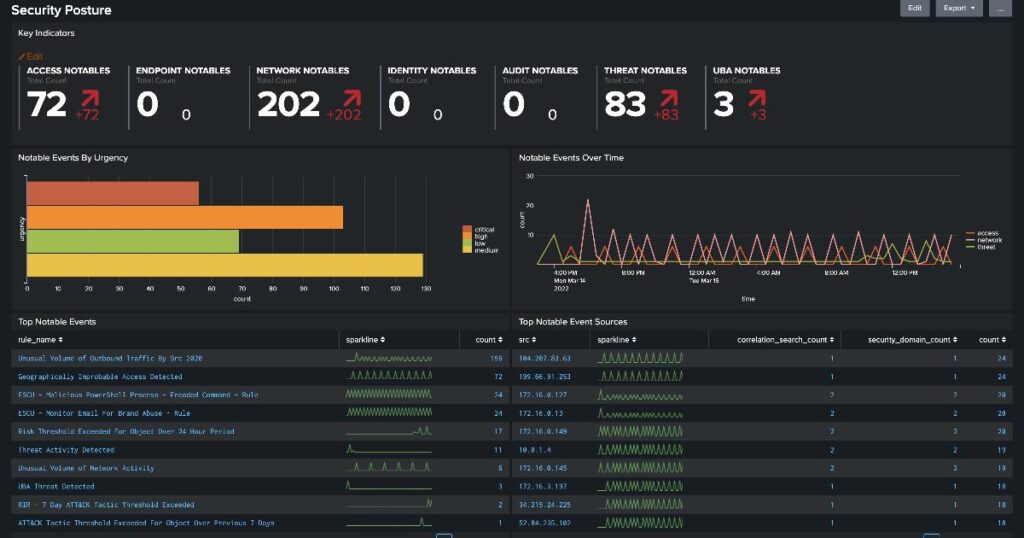
For years, the path into a security operations center (SOC) ran through certifications, tool training, and years-of-experience checkboxes. AI hasn’t erased that path, but it has exposed its limits. When software can generate plausible-looking analysis, plausible-looking code, and plausible-looking patches faster than any human team can review them, the scarce skill isn’t knowing the tools — it’s knowing when to distrust their output.
The mismatch AI created
AI-assisted vulnerability discovery has sped up one half of the security equation dramatically: finding potential problems. Scanners and coding agents now surface bugs and misconfigurations at a volume no human team could match manually. That’s genuinely useful. The trouble is the other half of the job — deciding what to do about all those findings — hasn’t sped up at the same rate, because that part still runs through human judgment.
Eric Schmitt, global CISO at Sedgwick, put it bluntly to ZDNET: he’d rather hire someone a year into their career who constantly asks "why does this work this way?" than someone twenty years in who doesn’t ask questions at all. His point isn’t that experience is worthless — it’s that experience alone doesn’t tell you what a brand-new AI agent is allowed to do, which data model it’s reading, or who can modify it. Credentials describe where someone has been. Curiosity describes how someone thinks, and in a field where the threat landscape mutates monthly, how someone thinks matters more than what they memorized.
That curiosity, Schmitt argues, needs a partner: critical thinking. AI tools are good at producing confident-sounding answers at scale. Someone still has to interrogate whether the answer is actually right — and that skill, he says, is the one that turns curiosity from noise into a genuinely proactive security posture.
Where AI genuinely helps — and where it quietly stalls
It’s worth being precise about what "AI struggles with cybersecurity" actually means, because it doesn’t mean AI is bad at security work in general. Alert-driven triage — the bread-and-butter task of chasing down something a detection system already flagged — is an area where AI tools perform credibly. That matters, because most of what SOC analysts do day to day is exactly that kind of reactive investigation.
The trouble starts with what happens when nothing flags anything. A benchmark released in mid-2026 tested 23 frontier AI models against ten simulated cloud-host investigations built from real breach data, using techniques drawn from the MITRE ATT&CK framework — a widely used catalog of documented attacker behaviors. None of the models fully detected every intrusion, produced a verified remediation plan, and closed the case on a single one of the ten scenarios. The failure wasn’t random. When an alert existed to follow, the AI agents did reasonably well. When the intrusion generated no alert at all — the kind of quiet, credential-based lateral movement that sophisticated attackers increasingly favor — every model missed it. As Ankur Anand, CIO at recruiter Harvey Nash, told ZDNET, that’s the detail that should worry people more than any skills-gap statistic: "an AI built to investigate alarms has nothing to chew on" when nothing trips the alarm.
This is where threat hunting comes in — the practice of proactively searching for malicious activity that automated alerts never caught. It’s a different cognitive task than triage. Triage answers "what does this alert tell me to investigate?" Hunting answers "what might be happening here that nothing told me to look for?" AI systems, built largely to follow instructions and respond to prompts, are structurally better suited to the first question than the second.
A related pattern shows up on the defensive side, once a problem is found. A 2026 study by 1Password’s security research team tested frontier models on generating patches for six real, recently disclosed vulnerabilities, producing over 6,000 patch attempts. Researchers had expected a success rate around two-thirds; instead, only about 26% of the AI-generated patches fully fixed the flaw without side effects, while roughly half left an exploitable path open entirely, and a further portion either altered application behavior or introduced new bugs. The researchers coined a term for this — "FLAWED" patches, for Fix-Like Artifacts With Embedded Defects — code that looks correct on the surface but doesn’t hold up under real conditions. Their conclusion was direct: treating a fully autonomous, unreviewed AI patch as safe to ship is, by their estimate, a net-negative proposition for most organizations right now.
None of this means AI patching or triage tools are useless — they clearly compress the time between "bug exists" and "someone starts looking at it." It means the last mile, verifying that a fix actually closes the door rather than just looking like it does, still needs a person who knows what to check.
Human strengths vs. AI strengths, side by side
| Security task | Where AI currently helps | Where human judgment still leads |
|---|---|---|
| Alert triage | Fast, high-volume sorting of flagged events | Deciding which flagged events actually matter to the business |
| Threat hunting (no alert) | Limited — models struggle without a pointer | Forming hypotheses about attacker behavior with no prompt to follow |
| Patch generation | Drafts fixes quickly and cheaply | Verifying a fix resolves the root cause, not just the symptom |
| Risk communication | Summarizes technical findings | Translating findings into a decision executives or clinicians can act on |
| Decision under uncertainty | Surfaces options and probabilities | Owning the call when evidence is incomplete or contradictory |
Turning a weak signal into a business decision
That last row is where the job increasingly lives. Errol Weiss, chief security officer at Health-ISAC, told ZDNET that AI tools "don’t understand business context, safety implications, or operational constraints" — which is exactly why a human still has to sit between the machine’s output and the organization’s next move. In healthcare, he noted, patching isn’t always straightforward; a fix that’s technically correct can still be operationally reckless if it takes a clinical system offline at the wrong moment. That kind of judgment call has nothing to do with running a scanner and everything to do with knowing the business.
The workflow that’s emerging looks less like "AI decides, human rubber-stamps" and more like a layered check:
flowchart TD
 A[Signal or weak anomaly] --> B[AI surfaces pattern or gap]
 B --> C[Human tests the assumption]
 C --> D[Add business and operational context]
 D --> E[Risk-based decision: contain, patch, escalate, or keep hunting]
Communicating that decision is no longer a soft add-on to the job — Anand describes it as knowing when a model’s output is wrong and having the confidence to say so out loud in a meeting, then turning "the model flagged this" into something the business can actually act on. Incident response, after a breach is confirmed, still runs through the same human loop: investigate what happened, contain the damage, restore systems, explain the tradeoffs to people who don’t speak in CVE numbers.
What this doesn’t prove
It’s worth being honest about the limits of this picture. A handful of quoted executives describing their hiring priorities is not a labor-market census, and nothing here shows certifications have become worthless — only that they’re no longer sufficient on their own. The benchmarks cited test specific models against specific scenarios; they’re evidence of a pattern, not a universal law covering every security product. And no study here claims AI oversight reliably makes security outcomes better across the board — only that human review currently catches failures autonomous systems miss.
What does seem to be shifting, consistently, is the emphasis: from "has this person used the tool before" to "can this person tell when the tool is wrong." AI is getting faster at finding problems and drafting fixes. The organizations doing well are the ones that haven’t stopped paying someone to ask why.